Announcing the Inaugural Innovation Champions

Everything we build on the Recidiviz Corrections Platform is directly informed by the expertise and feedback of corrections staff. From providing valuable insights into their workflows to piloting our tools, corrections staff ensure our tools are working as intended—meeting their needs and the needs of the people they’re supporting.
When corrections staff have technology that solves a pain point or frees up extra time in their day, that’s time they can then dedicate to helping someone prepare for reentry or stay on the right track.
In Idaho, Leiana Almaraz is a program manager overseeing a team of 16 case managers supporting more than 400 incarcerated individuals. Each day is different for Leiana, bringing a new set of challenges and opportunities.
“You're lucky if you get two or three things done from your list,” Leiana laughed. “Sometimes I'm helping someone whose ride fell through, other times I'm sitting in on classes, or doing caseload audits to ensure no one is staying incarcerated longer than they need to be.”
The work is rewarding for Leiana, who was drawn to corrections because of her belief in transformative change and desire to help people grow—whether it's helping someone better manage their emotions or reconnect with a family member. Finding resources for people is a critical, but challenging, part of case management. Community resources change frequently as organizations open or close, funding shifts, and options across the state vary widely. With technology, Leiana and her team can provide tailored support to people.
In Texas, Charles Morris supervises a team of eight parole officers. Twenty years into his career, he is motivated by the chance to make the world a safer and better place—and by the belief that the work can always improve. “If you think parole is going to be perfect, you'll wait forever,” he shared. “But we can make it better.”
That outlook shows up in how Charles runs his unit. He finds the work fulfilling precisely because it asks a lot of him: “Making the impossible look easy is a challenge and a rush, and when you can actually do it, it feels good.”
Keeping track of each officer's caseload used to mean working through contact sheets by hand. Now, Charles can open one screen and see summaries for contacts, home visits, annual electronic reporting, and supervision reviews for everyone in his unit. There is always another item on the to-do list, so technology that presents data in a usable format is a huge time saver.
Leiana’s and Charles’ stories demonstrate the truly amazing work that corrections staff do day in and day out: preparing people for release, keeping track of what every person needs and when, and managing their teams for success. To recognize their dedication and that of corrections staff across our partner states, we’ve created a new award: the Innovation Champion. Meet the inaugural winners:
Leiana Almaraz, Idaho Department of Correction

Leiana helped move the frontier of corrections technology forward, piloting AI-powered case planning and envisioning how it will reshape the role of case managers. Leiana provided critical feedback about how timelines and goals are presented in resident action plans, and her suggestions are shaping the next iteration of case planning not only in Idaho, but also nationwide.
“The purpose of my job is to reduce recidivism and give people the greatest chance of success by finding proper housing, resources, shelter, and employment,” Leiana shared. “If I have a tool that can help do that, I’m going to use it.”
Tanya Barker, Idaho Department of Correction
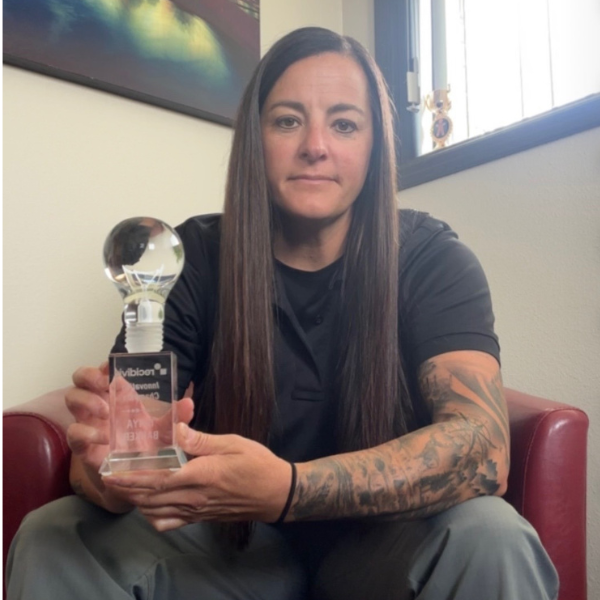
Tanya helped the Idaho Department of Correction (IDOC) bring home last year’s Data-Driven Corrections Award for Supervision Staff Engagement through her consistently high usage, 100% timely contact rate, and support for her fellow officers. As a trusted tester, Tanya also drove innovations in our search and task features.
“I’m proud to see home routing finally become a reality. It has transformed how my team and I plan our field days—saving time, reducing stress, and giving me clearer, more efficient routes,” Tanya shared. “It’s easy to access, apply, and immediately put to work, and it has significantly reduced the amount of time we spend managing our daily workload.”
Julie Cullen, Iowa Department of Corrections
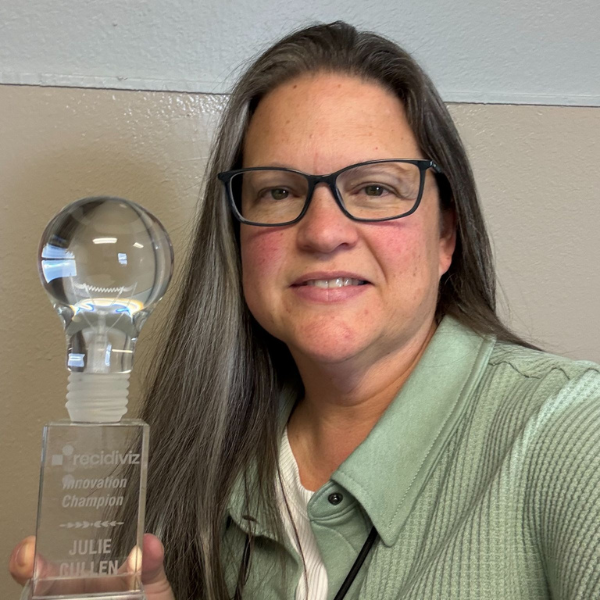
Julie was instrumental in our work together to create Iowa’s new discharge policy, going above and beyond to ensure the final policy met the needs of the parole officers under her. She suggested features, such as the supervisor approval flow, which have not only been built into Iowa’s supervision tool, but are also helping us refine tools that are being used by parole officers in Arizona and Michigan.
“I'm proud and excited that Corrections partnered with Recidiviz to build a tool that automatically checks routine requirements, provides a quick snapshot of clients who may be ready for discharge, and notifies staff of specific things they may need to evaluate further,” Julie said. “It relieves some of the burden on our staff and helps our staff work much more efficiently.”
Chad Daugherty, Michigan Department of Corrections
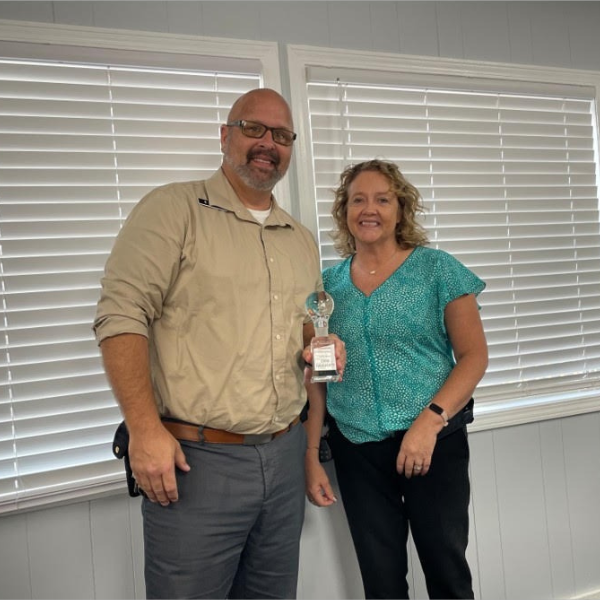
Chad provided critical feedback on data accuracy and how new features could support timely and compliant operations in his facility. He also contributed to Michigan’s Excellence in Facilities win at last year's Data-Driven Corrections Awards, logging in more than any of his peers to ensure restrictive housing reviews were completed on schedule. His engagement has been instrumental for statewide training.
James Gdanetz, Pennsylvania Department of Corrections

James has been a vocal advocate for technology adoption among his fellow officers. He drove the highest impact for Recidiviz’s supervision tool in the state, using it to efficiently process his own caseload of clients and save the Pennsylvania Department of Corrections money by downgrading eligible clients to limited supervision. James has proactively offered suggestions for additional processes that could be automated as well.
James spoke about how the tool has made his job easier: “Previously, you had to go through 78 or 100 pages to review everybody… ‘for this state case, do they have this code?’ and so on. [The Recidiviz tool] does that. It saves me time to focus on other elements of my caseload—the actual supervision elements.”
Kristen Keenan, Nebraska Department of Correctional Services
While Kristen would probably tell you she prefers to use her trusty black book over new software, it is precisely this candid feedback that made her a valued trusted tester for Nebraska’s supervision tool. She grounded the product’s development in the reality of her frontline work and helped validate the requirements the tool supports officers to check. Since product launch, she has used the tool to override eligible clients to conditional low release, focusing her field work on the clients who need more support.
Charles Morris, Texas Department of Criminal Justice
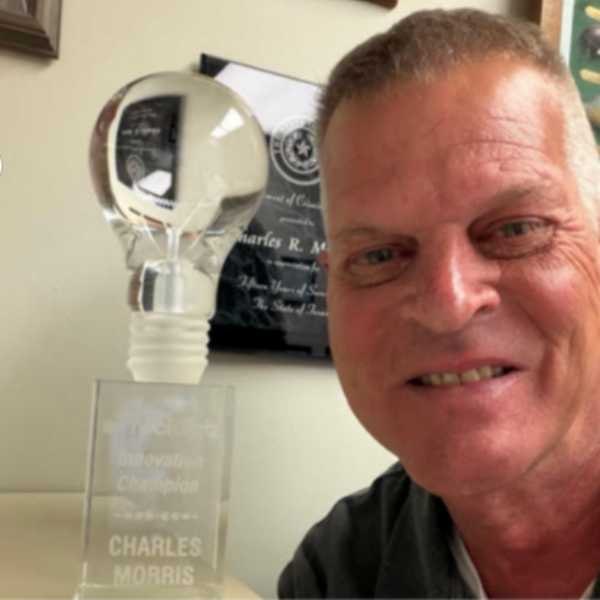
Charles is an enthusiastic champion for data-driven supervision, actively encouraging the officers on his team to engage with Tasks and Annual Report Status / Early Release Status tools from day one. Whether welcoming our team for on-site training, troubleshooting access issues for new staff, or raising feedback to help us make the tools work even better, Charles is always willing to roll up his sleeves and drive towards better case management.
“I see tech as a tool. We don’t have to do things in the ‘dinosaur age’ anymore,” Charles shared. “Sometimes people can be resistant to new tech, but let’s try it and see what happens. We have a tool to help us save time and be more efficient, so we should use it.”
Dewayne Prince, Arizona Department of Corrections, Rehabilitation & Reentry

Dewayne generously shared feedback to refine the Administrative Supervision tool. He approached the give-and-take of testing and feedback with patience and optimism, which has been incredibly helpful as we continue improving the tool. Dewayne’s engagement was instrumental not just for the Arizona Department of Corrections, Rehabilitation & Reentry (ADCRR), but in helping to refine supervision workflows that are now being used by his counterparts in other states.
“I am truly honored to have received this award,” Dewayne shared. “I like the fact that my agency is always looking to improve how we do business. I believe in my field it is important to always evolve.”
Charles Vanderwall, Michigan Department of Corrections
Charles maintained some of the highest engagement on the supervision tool of any officer in the state, reviewing 98% of discharge recommendations. As one of the top early discharge granters in Michigan, his work directly reduced supervision costs and improved outcomes for clients on his caseload.
Congratulations to the Innovation Champions! And thank you to every corrections staff member who shared their expertise with us this year. We’re grateful to build alongside you.


